
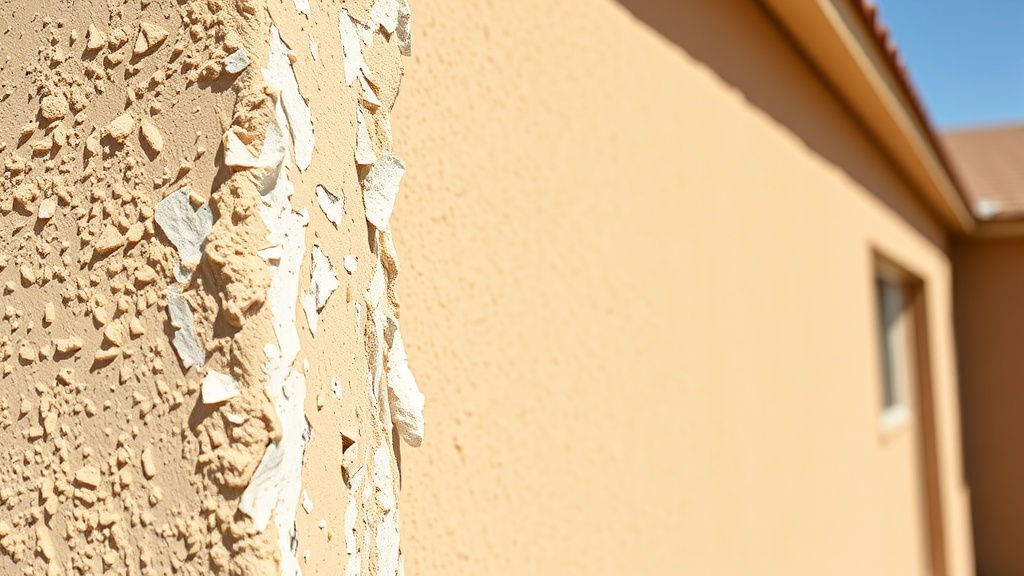
Yuma ranks among the sunniest cities on Earth. With over 4,000 hours of sunshine annually and a UV index that regularly hits 11 (extreme), what happens to paint on the sides of your house isn't a cosmetic issue — it's a maintenance cycle that determines how well your home holds up over time.
After sixteen years of painting and repainting homes across Yuma County, we've seen exactly what works, what fails, and what makes the difference between a paint job that lasts eight years and one that's chalking and peeling in three.
Why Yuma's Sun Destroys Paint Faster Than Anywhere Else
UV radiation attacks paint at the molecular level. The pigment molecules that give paint its color absorb UV energy and break down — this is chalking, the powdery residue you rub off a faded exterior wall. The binder holding the paint film together degrades too, causing the film to crack, blister, and eventually peel.
Yuma adds several compounding factors:
- Direct south and west exposure: South and west-facing walls receive peak UV radiation combined with the highest afternoon temperatures. A west-facing wall in Fortuna Foothills might see surface temperatures of 170°F in July.
- No cloud cover buffer: Unlike coastal or mountain climates where clouds diffuse UV, Yuma's clear skies mean unfiltered radiation nearly every day.
- Alkaline substrate: Stucco and block — the dominant exterior materials in Yuma — are alkaline. Paint applied without an alkali-blocking primer saponifies (the oils in the paint react with the alkalinity and turn to soap), causing early failure regardless of paint quality.
- Thermal cycling: Daily temperature swings of 60–90°F cause expansion and contraction that fatigues paint film. Over years, this shows up as cracking at building joints and penetrations.
The Two-Wall Rule: Why Your South and West Walls Fail First
Homeowners are often surprised when the north side of their house still looks great while the south and west sides are chalking and cracking. The math is simple: cumulative UV exposure is dramatically higher on southern and western exposures.
When planning a repaint, factor this in. The north and east sides of a Yuma home might be on a 10–12 year cycle. South and west might need touching up or recoating at 5–7 years to stay ahead of failure.
Some homeowners choose to repaint all four sides on the same cycle for aesthetic consistency. Others spot-treat south and west early. Both approaches work — what doesn't work is ignoring the warning signs until peeling starts.
Products That Actually Work in Yuma
Not all exterior paint is formulated for desert extremes. Here's what we actually use and recommend:
For Stucco and Block (Yuma's most common substrates):
- Elastomeric coatings: The gold standard for Yuma stucco. Elastomeric paint is thicker than standard paint and designed to bridge hairline cracks and flex with thermal cycling. Products like Sherwin-Williams Loxon or BASF Thoroseal are designed for masonry in extreme climates.
- Alkali-blocking primer: Non-negotiable on bare or raw stucco. Standard primers will fail. KILZ Concrete & Masonry and Zinsser Bondz are products we use on bare or heavily chalked stucco before recoating.
- 100% acrylic finish: Not latex-acrylic blends — pure 100% acrylic formulations have the best UV resistance. Sherwin-Williams Duration and Emerald Exterior both qualify.
For Wood Trim and Fascia:
Yuma isn't a climate where untreated wood trim survives well. UV breaks down the wood surface and standard paint fails at the adhesion interface. Use an oil-based primer under any topcoat on raw wood exterior trim. For fascia, consider fiber cement trim as a long-term replacement — it doesn't expand and contract like wood and accepts paint extremely well.
Prep Matters More Than Product Choice
We've said it before and we'll say it again: the preparation determines the outcome more than the paint you choose. The best elastomeric coating in the world will peel in two years if it's applied over chalky, dirty, or inadequately primed surface.
Proper exterior prep in Yuma:
- Power wash the surface — 1,500–2,000 PSI is typically right for stucco. Too much pressure can damage the surface.
- Allow to dry completely — 24–48 hours in summer, 48–72 in cooler months when the substrate takes longer to release moisture.
- Scrape all loose, chalky, and flaking paint. If the paint fails the tape test (apply tape, press firmly, pull — if paint comes off, the surface needs more prep), keep scraping.
- Fill any cracks wider than a hairline with flexible elastomeric caulk — not latex caulk, which dries rigid and will crack again.
- Apply alkali-blocking primer to any bare stucco or areas scraped to the substrate.
- Apply two coats of finish elastomeric coating, back-rolling to work the product into the texture.
Warning Signs You Need to Repaint Now
- Chalking: Rub your hand on the exterior wall. If it comes away with powder, the pigment is breaking down — the UV protection is gone.
- Cracking: Hairline cracks in the paint film (not the underlying stucco) indicate the film has lost its elasticity. Water can now enter through these cracks.
- Fading: Dramatic color fading, especially on south and west faces, means the UV-protective pigments are depleted.
- Peeling: Paint lifting off the surface — the adhesion has failed. The sooner this is addressed, the smaller the prep scope.
How Long Should Exterior Paint Last in Yuma?
With proper prep and quality elastomeric coatings:
- North and east faces: 9–12 years
- South and west faces: 6–8 years before recoat is needed
- Wood trim and fascia: 5–8 years with proper priming
- Low-quality paint or poor prep: 2–4 years before problems appear
Ready to protect your home from Yuma's sun? Call Handyman Yuma AZ at (877) 385-8386 for an exterior assessment and free quote. We've been painting Yuma homes since 2008 and know exactly what your walls need.