
Yuma gets just 3.3 inches of rain per year — but when it does rain, it comes hard and fast during monsoon season (typically July through September). That concentrated moisture, combined with a year of UV damage to roofing materials, is when leaks announce themselves. Here's how to spot them early.
Why Yuma Roofs Fail (The Desert-Specific Causes)
Most of the country thinks of roof damage as a rain problem. In Yuma, rain is almost irrelevant compared to the other forces at work:
- UV degradation: At Yuma's latitude with clear skies 300+ days per year, roofing materials degrade faster than almost anywhere in the US. Foam roofing (common in the desert Southwest) loses its UV-protective coating and develops cracks. Flat roofing membranes dry out and split at seams.
- Thermal cycling: A summer day might see a 90°F temperature swing between 3am and 3pm. This daily expansion and contraction fatigues seams, flashing joints, and penetration points.
- Clogged scuppers and drains: Flat and low-slope roofs accumulate desert dust in their drainage channels. When monsoon rain arrives, it can't drain fast enough — standing water finds every pin hole.
Sign 1 — Water Stains on Ceilings or Walls
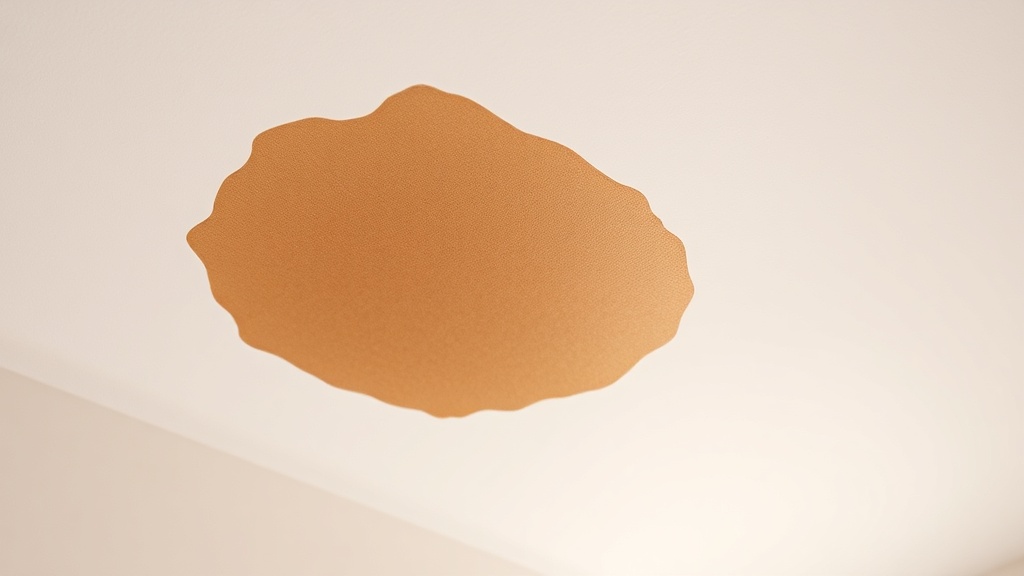
The most obvious sign. A brown, tea-colored ring on your ceiling means water got through somewhere above it — and it didn't stop there. By the time you see a stain, there's typically been multiple rain events penetrating the same spot. The stain size doesn't tell you the damage size — water travels along ceiling joists and drywall before it drops.
What to do: Don't just paint over it. The stain will come back through the new paint in one rain cycle. The leak source needs to be identified and sealed first.
Sign 2 — Bubbling or Peeling Interior Paint Near the Roofline
If paint on an exterior-facing wall or near the ceiling perimeter is blistering, bubbling, or peeling without any obvious cause, moisture intrusion is the likely culprit. In Yuma's dry climate, this kind of paint failure is almost never caused by humidity — it's almost always water coming in from somewhere.
Where to look: Flashing at roof-to-wall intersections, caulk around penetrations (pipes, vents, AC lines), and parapet wall caps on flat roofs.
Sign 3 — Sagging or Soft Ceiling Drywall
If your ceiling feels soft when you press on it, or if you can see a visible sag, water has been sitting on top of that drywall long enough to saturate it. This is a more serious situation — saturated drywall can collapse, and it's often a sign of a more significant leak or a drain backup on a flat roof.
Important: Sagging wet drywall can fall unexpectedly. If you see active water accumulation, poke a small hole to release the water in a controlled way before the weight causes a collapse, and call for emergency help.
Sign 4 — Granules in the Gutters or at Downspout Bases
If your Yuma home has a sloped section with asphalt shingles, check what's accumulating in the gutters or at the base of your downspouts. Shingle granules look like coarse, dark sand. Losing granules means the asphalt is exposed to direct UV — which accelerates degradation significantly. It's a sign the shingles are near end of life and won't shed water as effectively.
Sign 5 — Visible Cracks or Gaps in Foam Roofing
Spray foam roofing is the dominant roofing type in Yuma's flat-roof homes. It's excellent when properly maintained — the foam itself is waterproof, but the UV-protective elastomeric coating on top requires reapplication every 5–7 years. When that coating fails, the foam below is exposed to UV and begins to crack and degrade. You'll see a rough, granulated texture instead of smooth foam — and eventually open cracks or crumbled sections.
Get on your roof (safely, in the cooler hours) and inspect every few years. Look at penetrations especially — AC units, exhaust pipes, and electrical conduits are where the coating typically fails first.
How a Handyman Can Help
For minor roof-related issues, a skilled handyman can handle:
- Sealing minor flashing gaps with appropriate roofing caulk or membrane tape
- Clearing clogged scuppers and roof drains
- Patching small areas of failing foam coating with elastomeric touch-up compound
- Replacing damaged or missing gutter sections
- Repairing interior drywall damage after a leak has been fixed
- Sealing around roof penetrations (AC lines, vents, pipes)
For extensive foam roofing recoating, significant structural damage, or full roof replacement, a licensed roofing contractor is the right call. A good handyman will tell you which category your problem falls into.
Monsoon Season Prep: What to Do Before July
The best time to deal with roofing vulnerabilities is before monsoon hits. In late spring (April–June), before the heat becomes truly extreme, walk your roof or have someone do it and look for:
- Clogged scuppers or drain covers
- Gaps in flashing at parapets and penetrations
- Foam coating that's crumbling, cracked, or showing the raw foam below
- Curled or cracked caulk around any roof penetration
A pre-monsoon inspection visit typically costs $100–$200 and can identify problems that, if left for another season, could cause thousands of dollars in interior damage.
Think you might have a leak issue? Call Handyman Yuma AZ at (877) 385-8386 — we can assess the situation and handle the repairs that fall within our scope, and tell you honestly when a roofer is the right call.